

ProSKU WMS Cloud for First Liverpool Freeport Customs Site
ProSKU WMS Cloud for First Liverpool Freeport Customs Site
SSO Logistics Uses ProSKU WMS to Open Liverpool Freeport’s First HMRC/UK Government Approved Customs Site
Freeports aim to promote innovation and regeneration and create thousands of jobs in disadvantaged communities
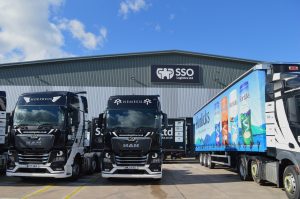 Implementing ProSKU Cloud-based WMS helped SSO Logistics to become the first customs site operator at the new Liverpool City Region Freeport. Using the cloud-based application enabled the company to meet the strict Freeport compliance demands of HMRC including detailed on-demand stock identification and tracking information. When the facility went live in December 2022 this was an important milestone because all Freeports must incorporate at least one customs site to be considered fully operational by HMRC and the UK Government.
“A key requirement for companies wishing to operate in Freeports is the ability to control stock movements and demonstrate this to HMRC on-demand. Many businesses control stock using WMS or ERP applications that are paper-based and have none of the real-time, auditability, traceability and reporting functionality demanded by HMRC. ProSKU does and we would highly recommend it.” Peter Draper, Director, SSO Logistics.
 Established in 2014 by Neil Draper, Peter Draper, and Simon Haslam, SSO Logistics offers a wide range of handling, storage, freight, and transport services for a diverse set of customers. Its facility in St Helens includes warehousing and dedicated ramps for the offloading of containers. As a member of Pallet Track, a network of more than 90 logistics specialists, the company offers an end-to-end service to customers throughout the UK and Europe.
When the Government announced eight new
Freeports in 2021, SSO Logistics was one of the
first companies to recognise the possibilities.
The proposed Liverpool City Region Freeport was close to the company’s existing site in St Helens and offered ideal potential for expanding the business. Freeports are special secure areas – based around sea, air, and rail ports – within the UK’s borders where different economic regulations apply. For example, they are subject to different import and export regulations with lower tariffs and VAT rates than conventional ports. By delivering investment on specific sites benefitting from tax and customs incentives, Freeports aim to promote innovation and regeneration and create thousands of jobs in disadvantaged communities. Each site has been carefully selected for its suitability for development by local authorities and key private partners and sits within a defined outer boundary
Some business benefits of operating in a Freeport:
- Duty and VAT Suspension
- Duty and VAT suspension on all Imports
- Duty and VAT Savings
- Duty and VAT exemption on ALL Re-exports from a Freeport site.
- Duty Inversion
- Lower rates of duty and country of origin changes for manufacturers
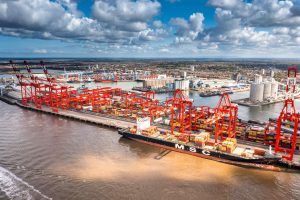 The Freeports model includes a comprehensive package of measures, comprising tax reliefs, customs, business rates retention, planning, regeneration, innovation and trade and investment support. This offers significant potential for businesses but companies using them must comply with some strict rules. In particular, they must be able to distinguish between stock that will be re-exported and that which is destined for customers in the UK. As part of this they must have systems in place to control and track physical stock and provide on-demand reporting to HMRC.
“The key advantages of Freeports are that imports can enter the UK with simplified customs documentation and also benefit from suspension of tariffs and import VAT. We recognised immediately the benefits to companies like us. As a third-party logistics operator of warehousing and distribution we needed to understand the legislative framework and achieve compliance as soon as we could.” Peter Draper.
 SSO Logistics has been using ProSKU at its facility in St Helens since 2018 to manage the continued growth of its warehousing and logistics operations. It chose the application because, being cloud-based, it required no on-site server. This meant that it could be deployed more quickly, with less complexity, and at lower cost than a conventional WMS application. The application is highly scalable which means it can adapt to the growing and evolving needs of users. This avoids the need to incorporate functions and capacity until they are required. The application is offered as a software-as-a-service with a simple monthly pricing model based on the number of users which means users only pay for what they need when they need it.
“It has worked really well for us over the years regardless of the demands we throw at it from our 3PL logistics contracts and has strong traceability and reporting capabilities.” Peter Draper.
 SSO Logistics aimed to become a customs site operator in the Liverpool City Region Freeport, based in Haydock on Merseyside. To meet this objective the company had significant and positive engagement with HMRC, largely focused on the requirement for stock traceability and reporting.
HMRC originally wanted all Freeport stock to be physically segregated. However, SSO Logistics argued that this would significantly impact its operation and storage capacity because its multi-tenanted business model means it deals with many different customers at the same time. HMRC suggested that the company could identify Freeport stock by physically attaching a label to relevant items. However, this would have meant additional handling and cost implications for SSO Logistics. On certain contracts it was not allowed to apply any labels. The company showed HMRC it could use ProSKU to identify, track, and trace on-demand all Freeport and non-Freeport stock. Its in-house team was able to implement the solution using the standard version of ProSKU without any modifications.
“We invested heavily and learned a lot going through the approval process. We see this as an opportunity – there are thousands of manufacturers in approved Freeport areas that can benefit from the scheme. We have decided to set up a new business unit to assist other companies in Freeports to attain customs site operator status or to manage the paperwork and duty issues on their behalf. We can manage all of the documentation and have a direct online portal to HMRC.” Peter Draper.
 After extensive testing, HMRC gave SSO Logistics permission to commence operations and the company opened the first customs site at Liverpool City Region Freeport in December 2022. This was an important milestone as all Freeports must have at least one customs site to meet the criteria stipulated by HMRC and the UK Government. The customs site incorporates storage and other services to hold and process stock while at the Freeport.
Previous Article
Harnessing Valuable Warehouse Space to Protect RevenuesNext Article
WMS and the Robotics and Automation effect


Registered office address: 3 Ongar Square, Ongar Village, Dublin 15 D15 H34C.